
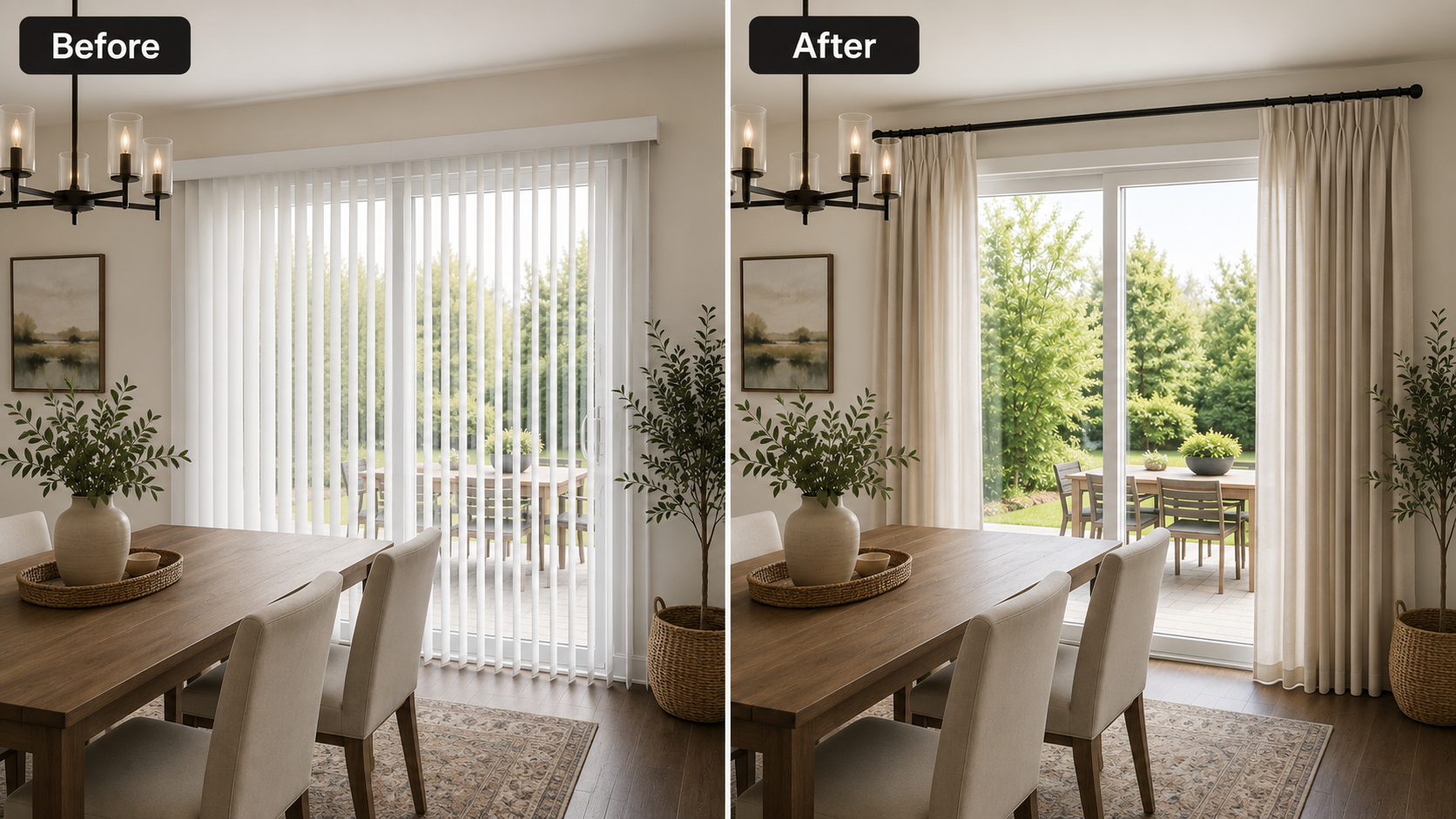
Transform vertical blinds with renter-friendly curtains—without drilling holes in the wall.
Sliding glass doors bring natural light into a room, but the vertical blinds commonly installed over them are not always attractive—or effective at providing the privacy, light control, and style you want.
If you live in an apartment or rental, replacing those blinds may not be allowed. Drilling holes for traditional curtain rod brackets can also mean violating your lease, damaging the wall, or creating repairs when you move.
Fortunately, you do not have to choose between keeping unattractive blinds and putting holes in the wall. If your sliding glass door already has blinds, you can use the existing blind headrail to support a curtain rod with NoNo Brackets. The blinds remain in place, and the curtains hang neatly in front of them.
Here is how to hang curtains over a sliding glass door without drilling—and how to choose the right brackets, rod, and curtains for a safe, polished result.
Can You Hang Curtains Over a Sliding Glass Door Without Drilling?
Yes. When a sliding glass door has an existing vertical-blind headrail, NoNo Brackets can mount directly over that headrail without screws, nails, adhesives, or holes in the wall.
This makes the setup especially useful for:
Apartments and rental homes
Sliding patio doors with vertical blinds
Rooms where drilling is prohibited
Concrete, brick, or difficult-to-drill walls
Anyone who wants a faster, removable curtain solution
Instead of removing the entire blind system, you keep it in place and add curtains in front. When it is time to move, the brackets can be removed without leaving holes behind.
What You Will Need
Before starting, gather the following:
The correct NoNo Brackets for your blind headrail
Three brackets for most sliding glass doors
A curtain rod that fits both the brackets and the width of the door
Curtain panels in your preferred color and fabric
A tape measure
No power drill is needed.
Important: Remove the decorative plastic valance from the front of the blinds before measuring the metal headrail. Measure the headrail itself—not the removable valance—to determine which NoNo Bracket style fits your blinds.
Step 1: Identify How Your Blinds Are Mounted
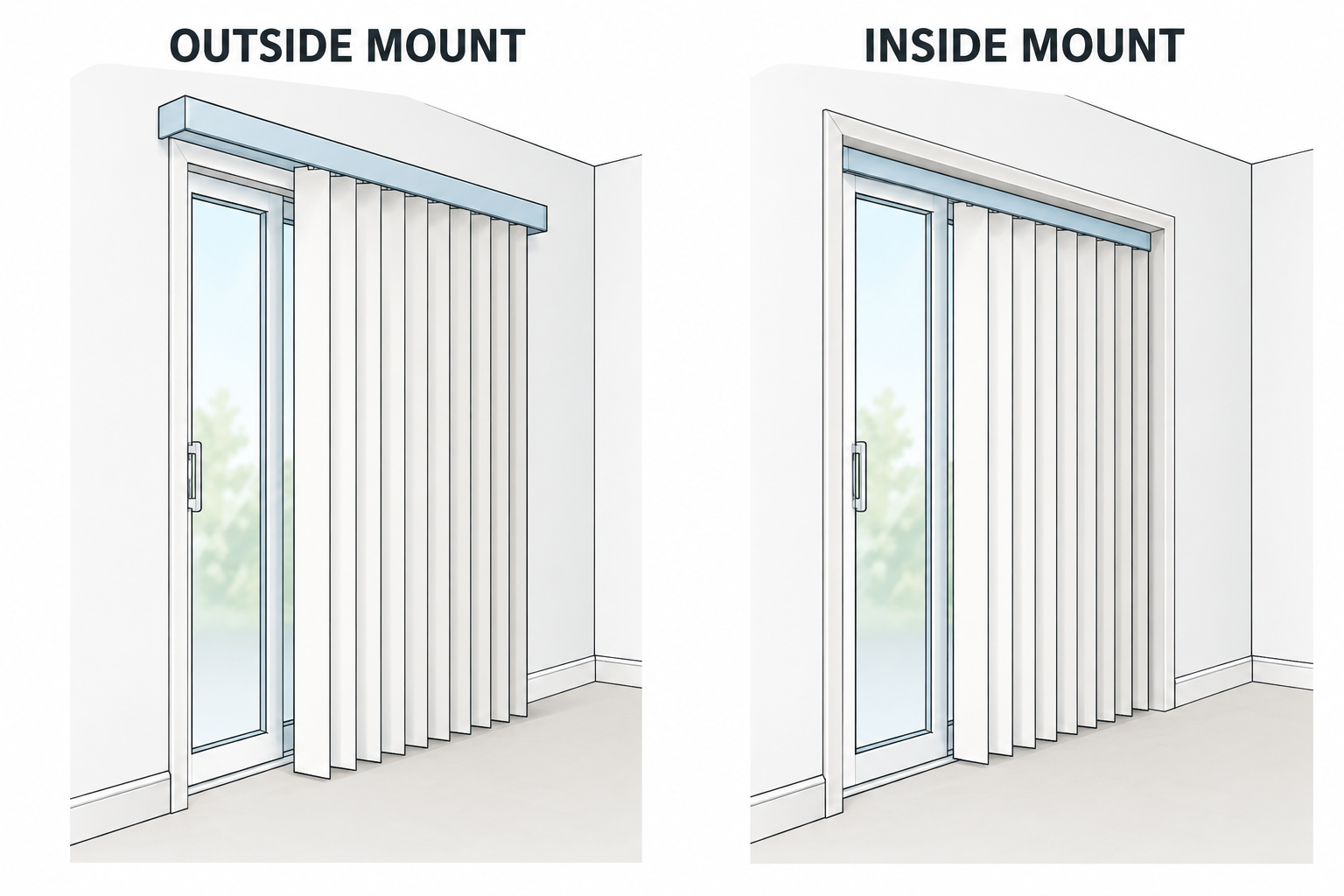
Look at the top of the sliding glass door and determine whether the blind headrail is mounted outside or inside the door opening.
Outside-mounted blinds
The headrail sits on the wall or trim above the sliding door and projects into the room. This common vertical-blind setup typically uses the NoNo Bracket Outside Mount style.
Inside-mounted blinds
The headrail is recessed within the top of the door opening. This setup typically uses the NoNo Bracket Inside Mount style.
Because blind headrails vary, always measure before ordering. The NoNo Bracket Buyer’s Guide can help you select the correct style.
Step 2: Measure the Blind Headrail
Remove the plastic valance, if present, so you can see and measure the actual headrail.
Measure the headrail carefully and compare the measurement with the product specifications for the appropriate NoNo Bracket. Do not estimate based on the overall size of the sliding door; bracket fit depends on the headrail itself.
This small step prevents the most common ordering mistake: measuring the decorative cover instead of the metal blind headrail underneath it.
Step 3: Choose the Right Curtain Rod
Sliding glass doors are wider than standard windows, so select a curtain rod long enough to span the full door while remaining stable.
For the best result:
Choose a rod that fits the diameter supported by your brackets.
Avoid extending a telescoping rod farther than necessary.
Use a center support to reduce sagging across a wide opening.
Check that the rod and curtains stay clear of the door handle and blind controls.
A rod that is too short will not cover the entire glass area. A rod that is overly extended may bow in the center, especially with heavier curtains.
Step 4: Use Three Brackets for a Sliding Glass Door
Use three NoNo Brackets for sliding glass doors and for openings wider than 60 inches: one near each end of the headrail and one near the center.
The center bracket provides added support across the wider span and helps keep the curtain rod level. This is particularly important when the curtains will be opened and closed regularly.
For windows narrower than 60 inches, two brackets are generally used. Sliding glass doors, however, should normally receive the three-bracket setup.
Step 5: Attach the NoNo Brackets to the Existing Blinds
Position the brackets on the blind headrail according to the installation instructions for your bracket style. Space the two outer brackets evenly and place the third near the center.
Secure each bracket so it sits firmly and level. The bracket should attach to the existing blind headrail without drilling into the wall.
Before adding the rod, confirm that:
All three brackets are secure
The brackets are aligned at the same height
The center bracket is positioned to support the rod
The vertical blinds can still operate as intended
Step 6: Add the Curtains and Curtain Rod
Slide your curtain panels onto the rod, then place the rod into the brackets. If your curtains use rings or clips, attach them before setting the rod in place.
Distribute the fabric evenly and slowly test the curtains. Open and close them while watching the rod and brackets. Make sure the fabric glides smoothly and does not catch on the vertical blinds or door handle.
You now have curtains over your sliding glass door without drilling holes or removing the blinds.
What Curtains Work Best for Sliding Glass Doors?
The best curtain depends on the room and what you want to improve.
Blackout curtains
Choose blackout curtains when your priority is reducing outside light, increasing nighttime privacy, or improving a bedroom or media room. Because blackout panels can be heavier, use a properly supported rod and the recommended three-bracket arrangement.
Light-filtering curtains
Light-filtering curtains soften bright sunlight while keeping the room airy. They are a good choice for living rooms and dining areas where you want privacy without making the space feel dark.
Sheer curtains
Sheers add softness and daytime privacy while allowing plenty of natural light. They are lightweight and easy to move, although they provide limited privacy at night when interior lights are on.
Thermal curtains
Thermal or insulated curtains may help a room feel more comfortable near a large glass door. Check the curtain weight before installation and avoid overloading the rod or brackets.
How Wide Should Curtains Be for a Sliding Glass Door?
For a full, finished appearance, the combined width of the curtain panels should generally be about 1.5 to 2 times the width you want to cover.
For example, if the area is 80 inches wide, aim for approximately 120 to 160 inches of total curtain width. Two panels that are each 60 to 80 inches wide can create a fuller look than panels that barely meet in the middle.
Measure from the curtain rod to your desired stopping point before selecting the length. Floor-length curtains usually create the most polished appearance, but the fabric should not drag where it could interfere with frequent use of the door.
Should Curtains Open From the Middle or One Side?
That depends on how your sliding glass door opens.
If the door opens from one side, you may prefer to stack most of the curtain fabric on the fixed-glass side. This keeps the walkway clearer. For a centered or symmetrical look, use two panels that open from the middle.
Whichever arrangement you choose, test the curtain placement to ensure easy access to the handle and a clear path through the doorway.
Why Use NoNo Brackets Instead of Adhesive Hooks or a Tension Rod?
Not every no-drill curtain method works well across a wide sliding glass door.
Adhesive hooks depend on the condition and cleanliness of the wall surface, and removal can sometimes affect paint. Tension rods require two opposing surfaces and may not suit the width or layout of a patio door. Floor-to-ceiling systems can take up additional space and change the appearance of the room.
NoNo Brackets use the existing blind headrail, so no adhesive is applied to the wall and no holes are created. They are designed specifically for hanging a curtain rod over existing blinds, making them a simple option for renters who want to keep the original window treatment in place.
Common Mistakes to Avoid
Measuring the plastic valance
Remove the decorative valance and measure the blind headrail underneath it. The valance is not the mounting surface.
Using only two brackets on a wide door
A sliding glass door needs center support. Use three brackets to help prevent the rod from sagging.
Choosing curtains that are too heavy
Check the product guidance and consider the combined weight of the rod, curtain panels, rings, and accessories. Do not exceed the recommended capacity.
Blocking the working side of the door
Arrange the curtains so they do not crowd the handle or walking path when open.
Extending the rod too far
An overextended telescoping rod is more likely to bow. Select a rod sized appropriately for the opening.
A Renter-Friendly Sliding Glass Door Upgrade in Minutes
Curtains can make a sliding glass door feel warmer, more private, and more connected to the rest of your décor. With the right no-drill brackets, you can create that transformation without removing your existing blinds or damaging the wall.
NoNo Brackets mount over the blinds you already have, install in minutes, and can be removed when you move. They are an ideal solution for apartment sliding doors, rental homes, and anyone who wants curtains without a complicated installation.
Ready to cover your sliding glass door without drilling? Shop NoNo Brackets for windows and sliding glass doors and use the Buyer’s Guide and installation video to find the correct fit for your blinds.
Frequently Asked Questions
Can I hang curtains over vertical blinds without removing them?
Yes. NoNo Brackets attach to the existing blind headrail, allowing curtains to hang in front of vertical blinds while the original blind system remains installed.
How many curtain rod brackets do I need for a sliding glass door?
Use three brackets for a sliding glass door or an opening wider than 60 inches. Place one near each end and one near the center for additional rod support.
Do NoNo Brackets damage apartment walls?
NoNo Brackets mount to a compatible existing blind headrail rather than being screwed or nailed into the wall. Correct installation does not require wall holes.
Do I need to remove the blinds first?
No. Keep the blind system installed. Remove only the decorative plastic valance before measuring and installing the brackets.
Can I use blackout curtains over a sliding glass door?
Yes, provided the rod, brackets, and headrail can safely support the total weight. Use three brackets and check the applicable product guidance before hanging heavy panels.
Will the vertical blinds still work behind the curtains?
They can remain in place behind the curtains. Make sure the brackets, rod, and fabric do not obstruct the blind controls, door handle, or travel path.